Page updated on Friday, October 16, 2026




Latest work completed:
Made background buildings in McKeesport to fit around a framed-in drain pipe in the wall.
Installed the background behind the steel mill.
Made several background buildings.
Reworked the steel mill bridge to the blast furnace.
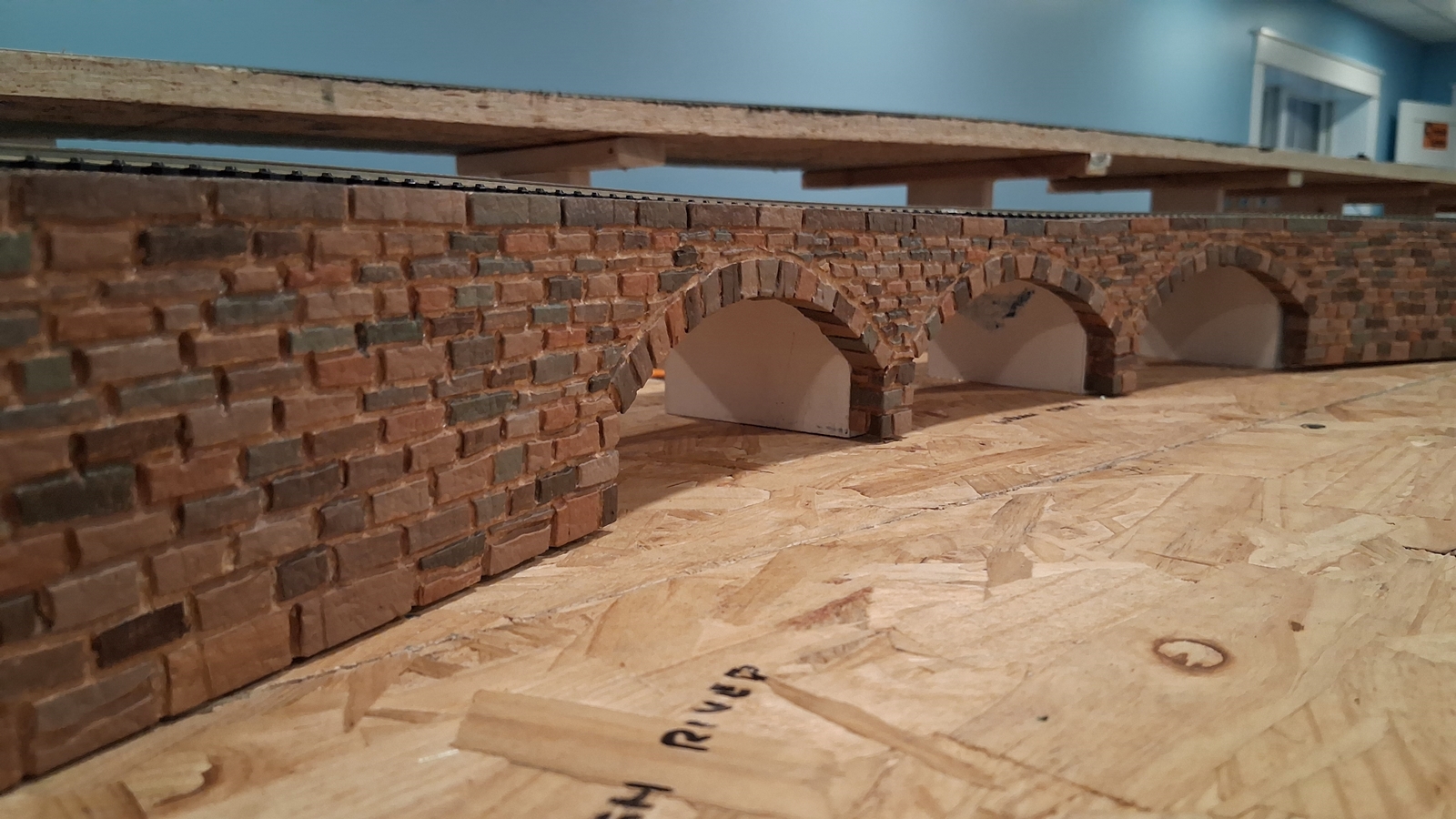
Started on the Indian Creek stone viaduct.
Next work to do:
Continue work on the Indian Creek viaduct.
Overview of the Layout
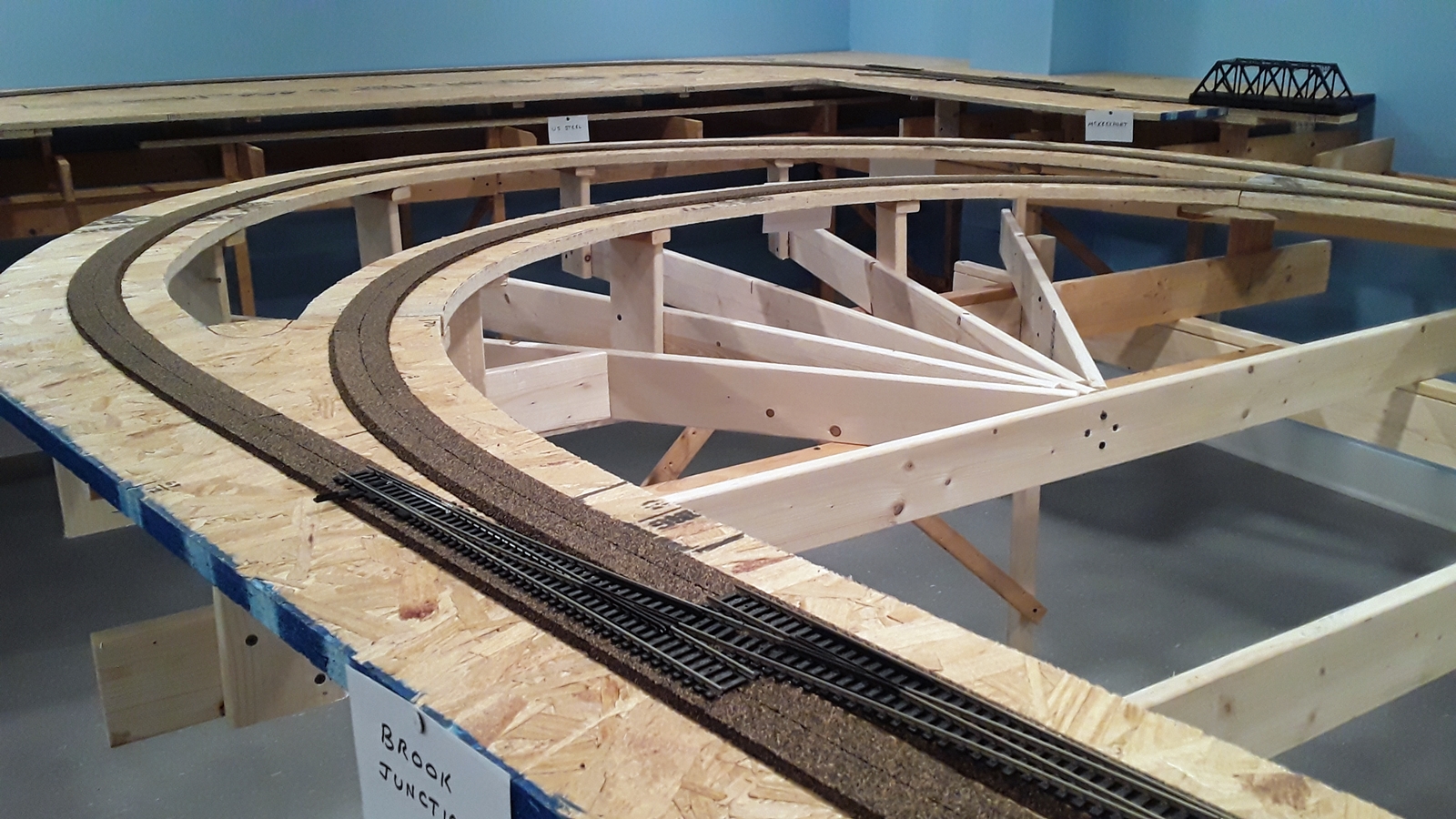
For the Indian Creek viaduct, I first made a template of the three stone arches to best match the proportions
of the actual bridge. It is scaled down to fit within the curve. I then had to place risers below the subroadbed
to maintain the correct grade.
Using the template, I transferred the profile of the bridge onto foam and cut it out.
Using a hot knife, I cut the stones into the foam to best match the pattern in the photo.
Before painting, I sealed the foam board with a mixture of Mod-Podge and light brown paint.
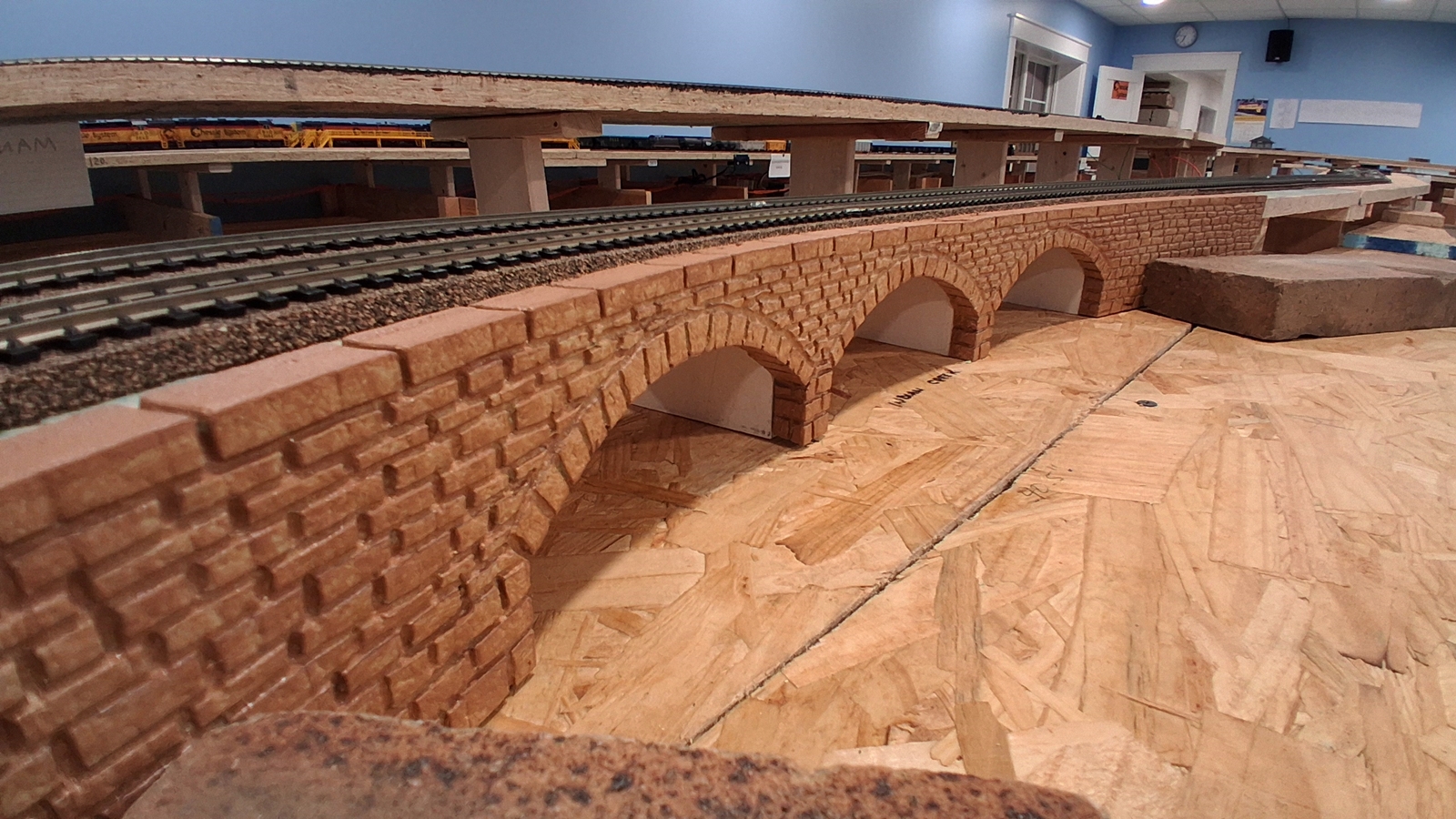
Using a mix of browns, gray, black, and some green, I painted each stone to give a random look.
Next is to drybrush it to highlight the texture and then will cover it in a wash of black to weather it.
I redid the steel mill bridge to the blast furnace. I took out the curve in the bridge, and made it straight.
It was difficult trying to get the sections aligned on a curve. I removed one of the truss bridge sections
and replaced it with a girder bridge in the center. I just have to add the track to the bridge deck.
Added the backdrop on the left side of the rolling mill.
This is the background on the right side of the rolling mill. I took the background photo many years ago of
the hillside in West Mifflin. I also made several background buildings that I can swap around until
I see what looks the best.
These background buildings were made from a CD of background buildings I purchased and actual buildings
in McKeesport that I found online. This includes the "Discover McKeesport" sign on the People's Building.
I had to fit them all together like a puzzle to fit around the framing hiding a drain pipe.
Overview of the steel mill. Pittsburgh is to the left, McKeepsort to the right.
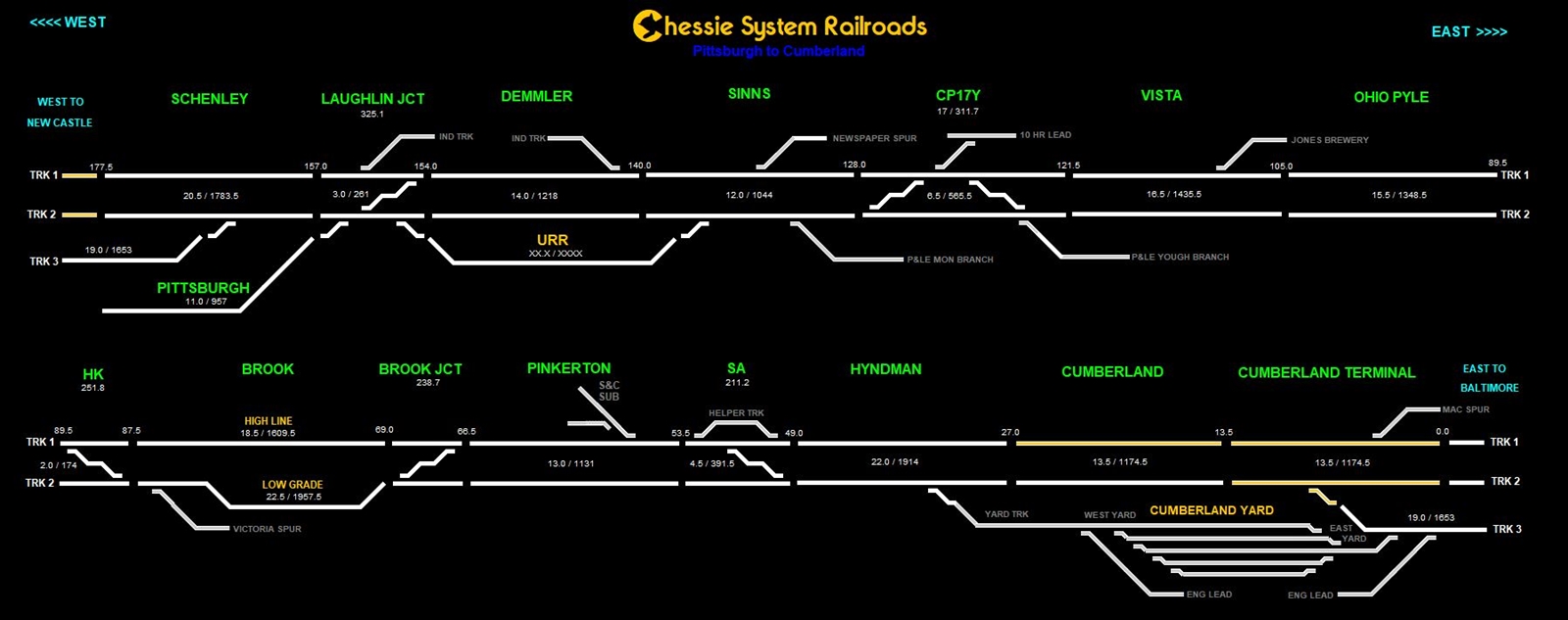
This is the JMRI software screen of the track diagram.
The yellow segments of the track shows the location of the occupied blocks and interlockings.
Layout Specifications:
Mainline Length:
Track 1: 177.5 ft (2.93 scale miles)
Track 2: 181.5 ft (2.99 scale miles)
Minimum Walkway Width: 35"
Minimum Subroadbed Height: 44.5"
Maximum Subroadbed Height: 48.75"
Minimum Radius: 30"
Curve Easements: 18" transition, 0.5" offset
Super Elevation: 0.030"
Atlas Code 100 Flex Track and Switches
Tangent Track Center to Center: 2"
Curved Track Center to Center 2.25"
Yard Track Center to Center: 2"
Mainline Maximum Grade: 1.5%
Mainline Crossovers: #8
Spurs off of the Mainline: #6
Yard/Industrial Switches: #4
DCC: NCE Powerhouse Pro System with 3 power districts
JMRI Software
Track charts showing the location of switches, tunnels, bridges, elevation, grade, and the interlockings and blocks.
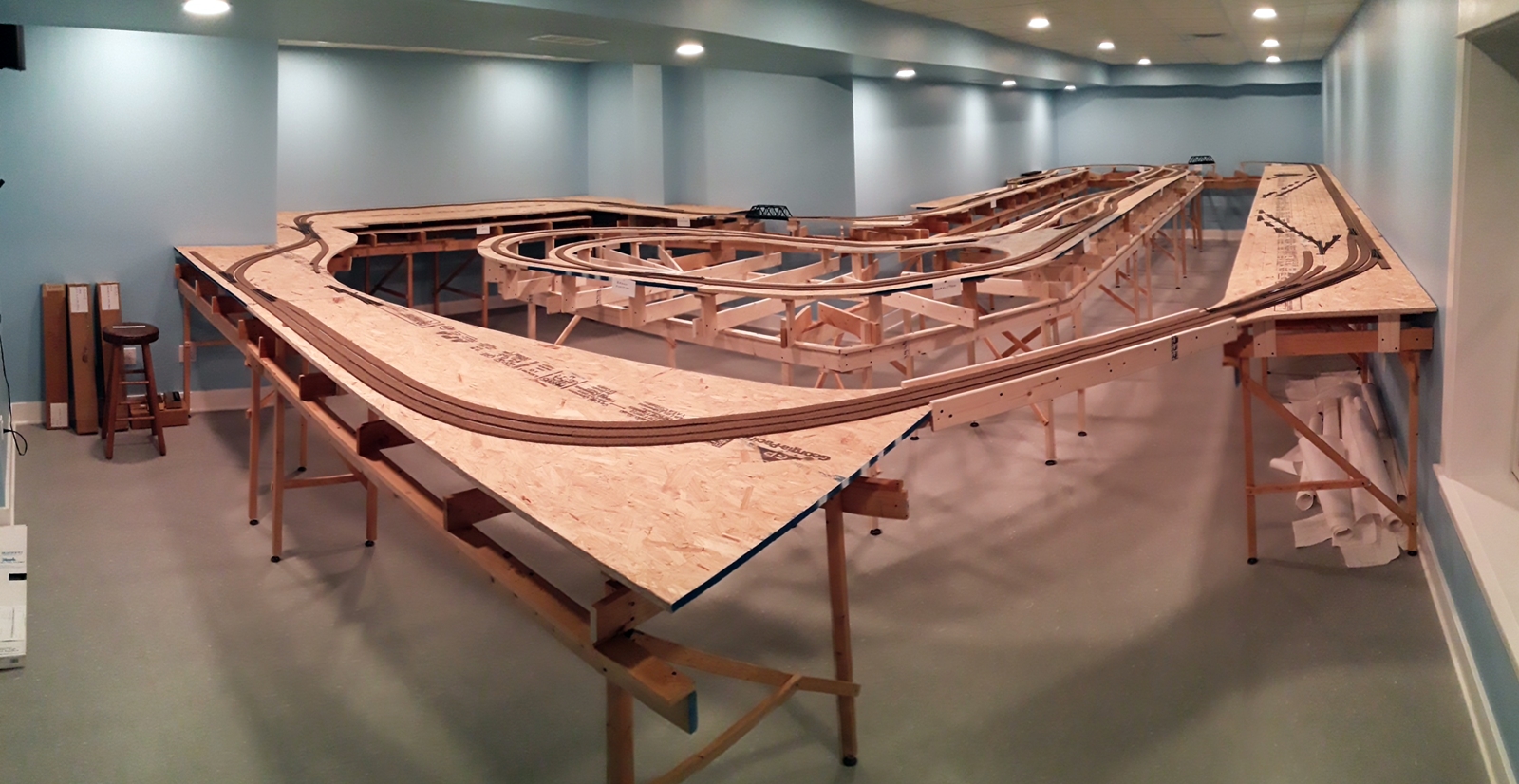
Some of the track is not totally accurate due to space, but all the tunnels and bridges are properly located.
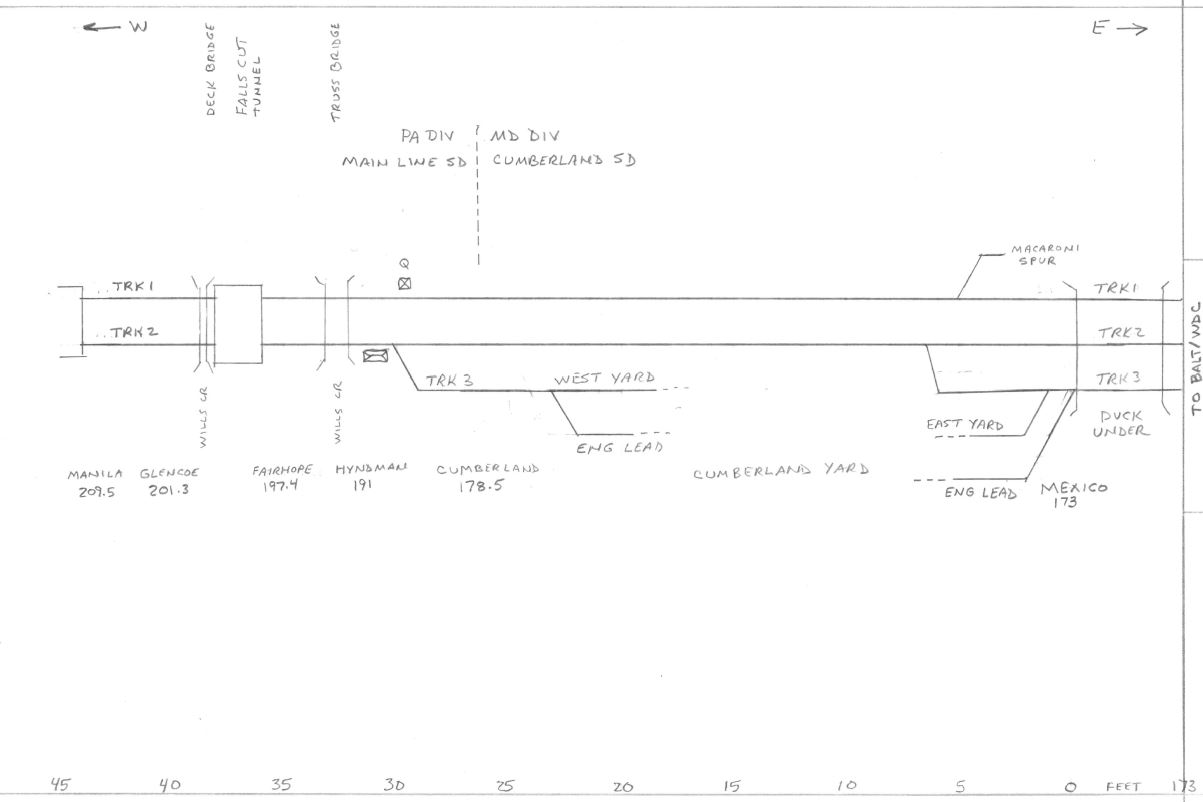
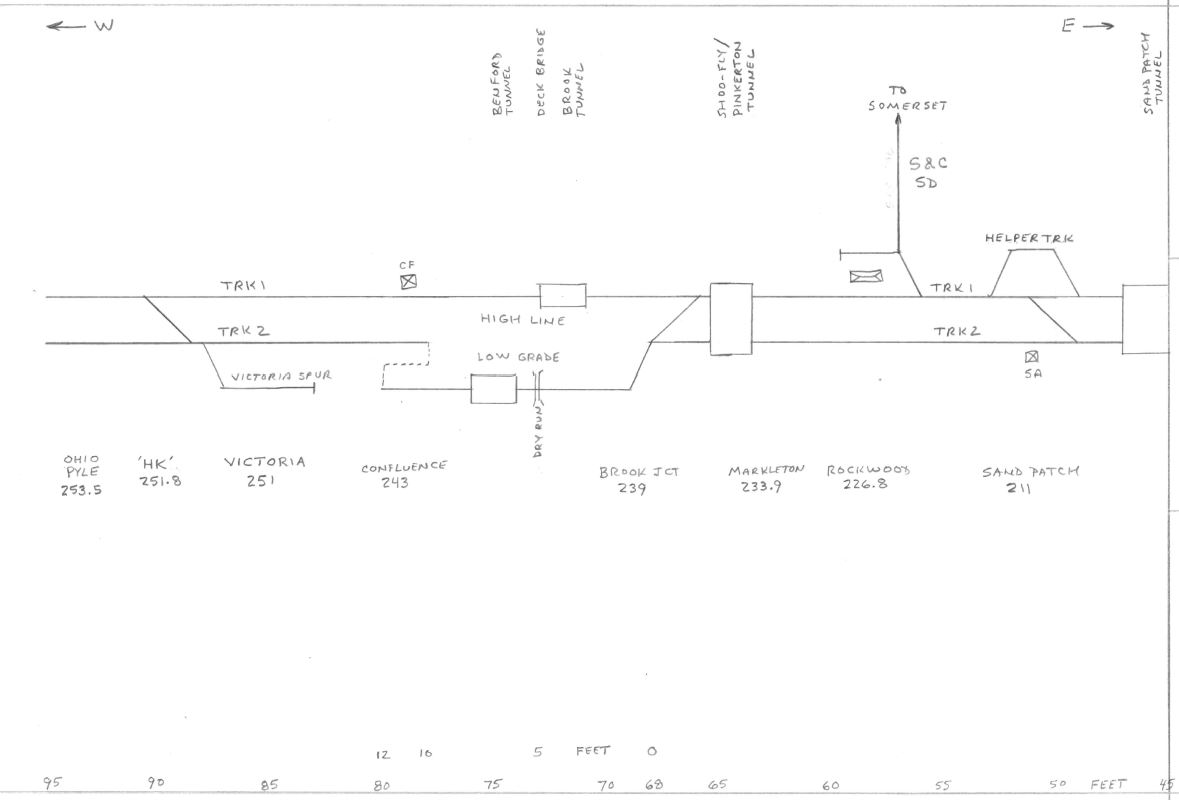
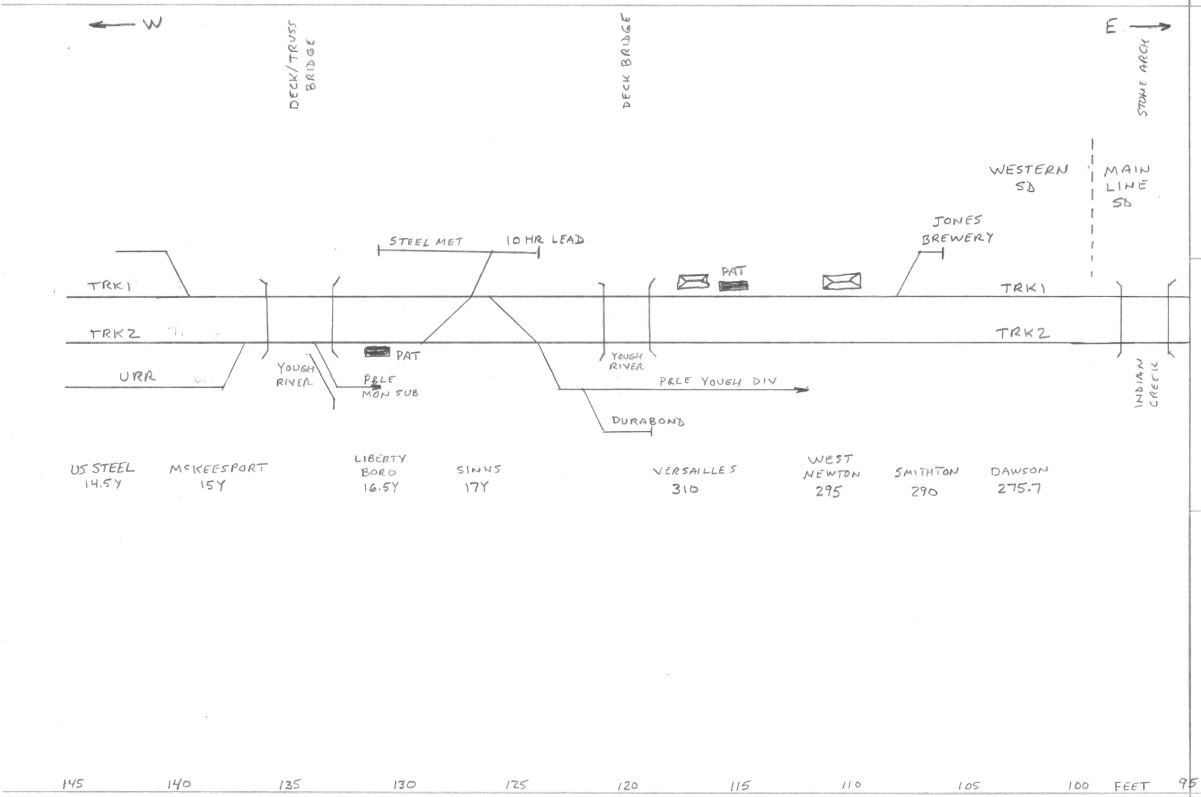
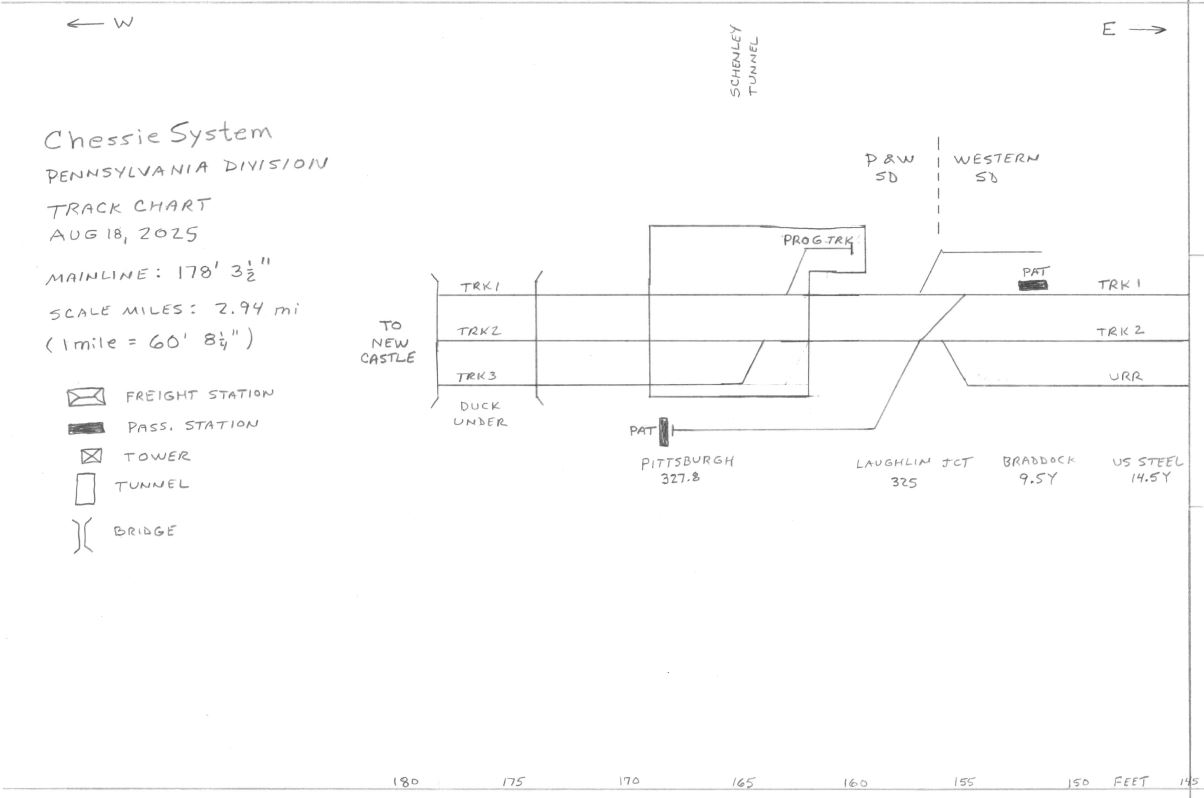
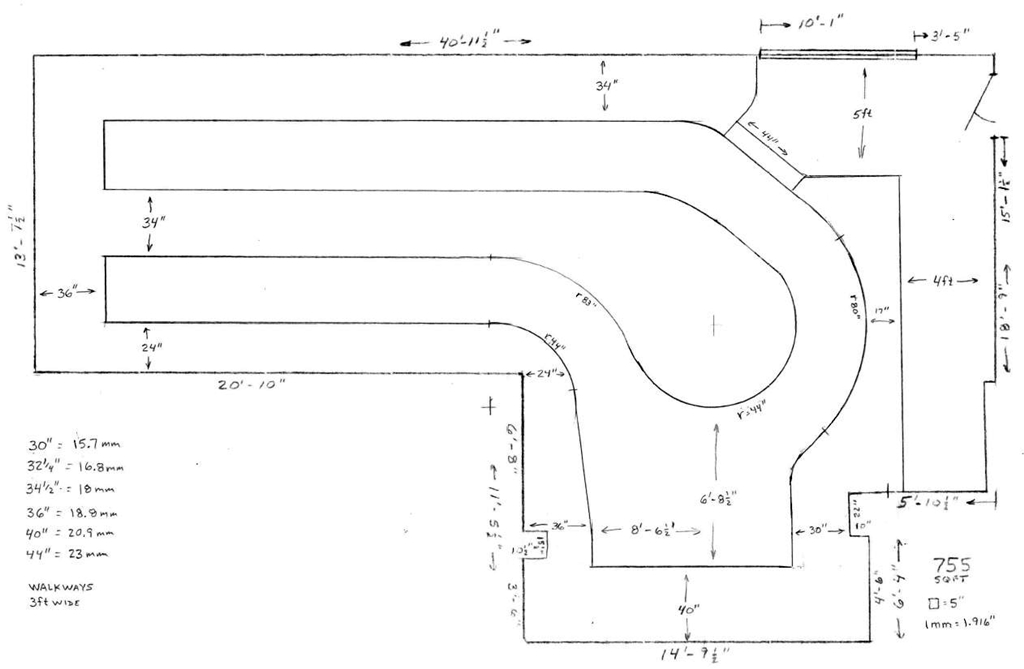
Train room dimensions along with the approximate dimensions of the layout.
The size changed a bit as I was laying out the track. The room is approximately 755 sqft.
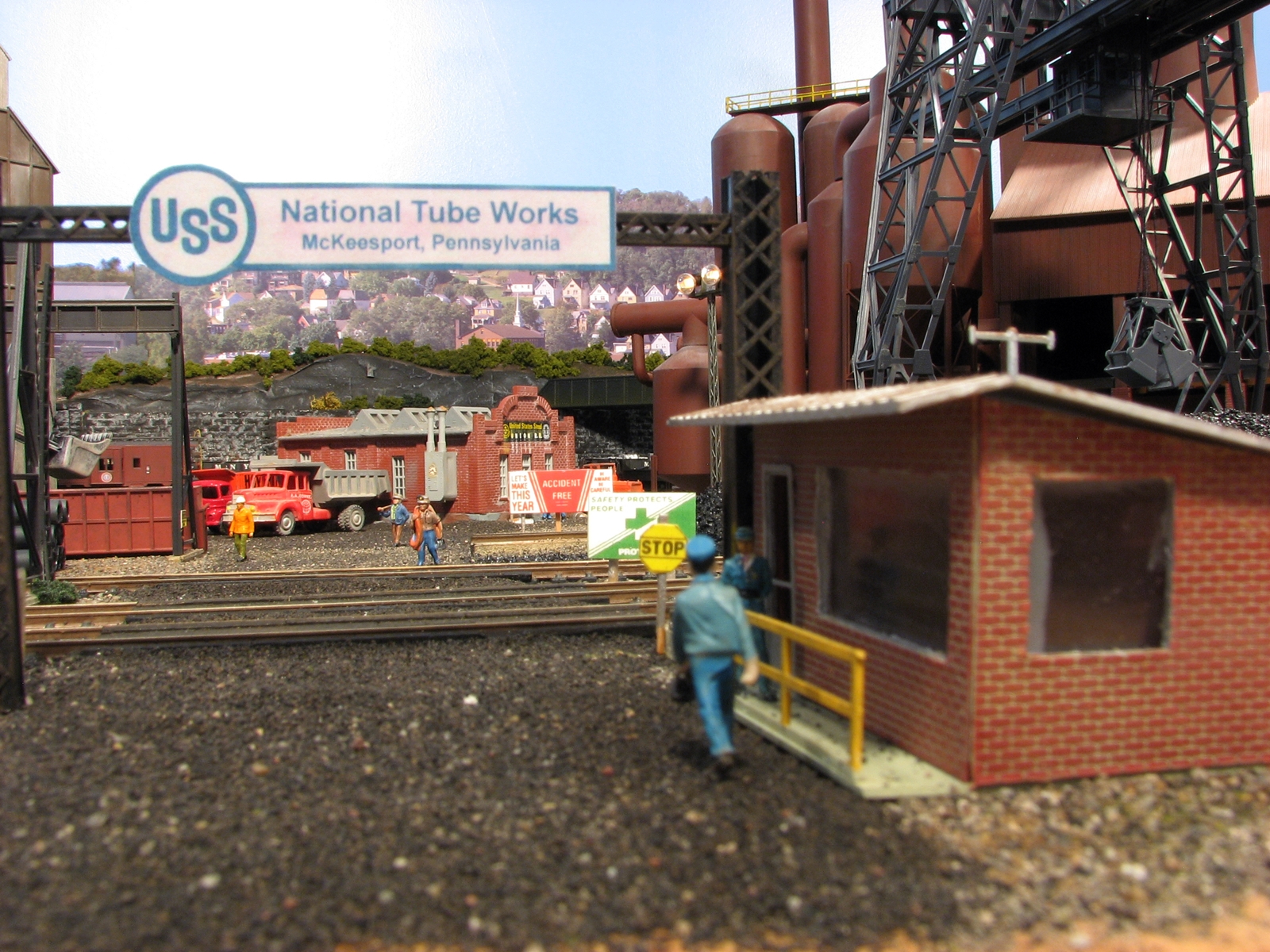
A photo from my old layout in Maryland (2001 - 2019).
This photo took me several attempts to get it right.
A priority trailer-train heads east through Markleton PA.
I am a member of the following railroad historical societies.

